Stories From My Life


  • A Rock In The Snow

    or “No room for self-pity.”

    It was fall in Southern Kazakhstan. At our Bible School/Orphanage in the foothills of the Alatau Mountains it was cold at night and barely warm in the day. We did not have the money to buy coal for the 8 furnaces that warmed our buildings so we bundled up and drank a lot of coffee and tea.

    One of our young students had been born again a few years before and was ready to go with his young wife and his cousin back to his hometown to preach the gospel. I had promised to take them in my “NIVA” (a small Russian jeep modeled on the American jeep of World War 2). They lived an hour beyond Naryn, in Central Kyrgyzstan.
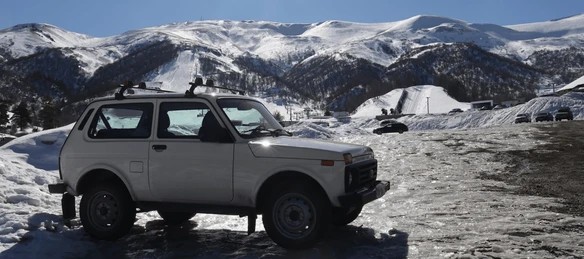
    Russian NIVA

    He had come to us after hearing that his cousin was with us, studying the Bible. He had been a member of the elite Presidential Bodyguard of Kyrgyzstan, and at one time had been a hand-to-hand combat champion. He had many scars, including an ear that was just a lump of scar tissue.

    He came to try to talk his cousin into leaving. He had asked me if he could stay, his hostility clear on his face. I told him he could, as long as he didn’t make any trouble. He spent his time arguing for Islam and trying to convince his cousin to go home with him. She refused.

    A few weeks after he arrived, his cousin trusted Christ in our living room. This really upset him. He told me directly that he wished us dead. I laughed and told him neither he or anyone else could lift a finger to touch us unless it suited God’s purpose and in that case it would be a good thing for the Gospel. He just fumed.

    About three months after arriving (yes, he stayed that long, I believe he was secretly searching for the truth), he trusted Christ as his Saviour during a Sunday worship service. His conversion greatly influenced many others that were “on the fence.”

    After about a year, during which time he studied the Bible, he married a Kazakh girl that had also trusted Christ. She had lost her University slot and her family’s approval in order to become a Christian. They fell in love and I married them.

    He came to me a while after this to tell me he wanted to go and preach the Gospel to his people, his relatives and friends in his home town. I counseled him to pray and seek God’s clear leading. His home town was very hostile to the Gospel and his father was a violent tyrant. He said they were sure so I agreed.

    We ordained him as an evangelist and promised to help any way that we could. I made plans to move him, his wife and his cousin back to their home town. When the day came to move them, I asked another Kyrgyz Bible student who knew the area to go with me.

    There are five seats in a NIVA jeep. We loaded up early one morning and piled their belongings on the roof, along with the spare tire. I always carried two spares in Central Asia. I averaged about 4 flats per month. The NIVA tires had inter-tubes and could be fixed on the side of the road if need be.

    We were loaded heavy but began our slow trip. The trip would take us 5-6 hours to the Kazakh/Kyrgyz Border, then 8-9 hours to Naryn, then another 1-2 hours to Baetovo. I planned to unload them and turn around and head back. Baetovo was a hostile place to spend the night as a foreigner.

    The trip to the border was uneventful. After crossing the border it was necessary to go through part of Bishkek before turning east out of the city towards Naryn. Right after the turn east our problems started. As we were leaving the city, the car suddenly felt out of gear (The NIVA is a manual transmission). It was in gear but acted as if it was out of gear. I was accustomed to losing a gear every once in a while (and drove for a few months with just 1st, 3rd and 5th) but I had never lost them all at one time! It was weird. I coasted to a stop and eventually figured out that the transfer case was not in gear. It shifted between LOW and HIGH but was in the middle, neutral. It would not stay in either. I called the evangelist over and told him he was going to sit between the seats and try to hold it in LOW by pulling back with all his strength. I need to get up a little speed to get a kilometer or two back to where I had seen a car repair shop. He did and we were able to get up to 15-20 miles per hour. I’d gas it a little and it would pop out, he would pull it back in and I’d gas a little more. We made it to the repair facility.

    By the Lord’s provision the repair facility was a GAZ official repair depot (GAZ factories built the Niva). We coasted to a stop and I walked in to talk to them. Inside were a group of Russian mechanics standing around (business was slow) and one Kyrgyz Mechanic. The Russians were obviously imported specialists.

    I told them my problem and they rolled their eyes. “Those things go out all the time and we don’t fix them. We never break them open. We just install new ones.” I asked if they had a new one and they said they had one left. I asked them how much and they told me a price equal to $180. This was a problem. I didn’t have $180. I asked them to try to fix it and they dismissed me. They just walked away. I walked outside to think and pray.

    The Kyrgyz mechanic had been silent during the conversation but now came outside and walked up to me. “I don’t know if I can fix it or not, but if you have no options, I can try.” He said. His breath reeked of vodka. “How much will that cost me?” I asked him. He told me a sum equal to $20. I told to go ahead. He told us to come back at 5pm.

    We came back and walked into the shop. That transfer case was open and occupying two table with small pieces. The other mechanics were poking fun at him for trying something everyone knew he could not do. He was hard at work, though with fresh vodka on his breath. An hour later we were on the road. Note: I drove that NIVA for another 4 years and never had another problem with the transfer case.

    This time we drove without incident, arriving in the middle of the night to Baetovo. We unloaded the Evangelist, his wife and his cousin and turned around to head back. It was beginning to snow.

    The road between Bishkek and Naryn crosses a line of mountains through a pass. The pass was at 10,200 feet. In those days it was an unpaved dirt road of barely two lanes. I knew that if it was snowing at Baetovo, it was for sure snowing in that pass. That pass could block with snow for up to a week. I wanted to get through it while it was open.
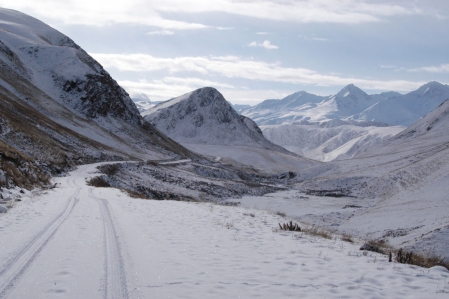
    Dolon Pass, Lower side

    We passed through Naryn and turned up into the mountains. The snow was falling steadily and accumulating. Watching the road at night with no lines or guardrails was exhausting and I was already tired. I woke up the Bible student I had with me and told him he had to keep me awake. It was a waste of time. He was asleep in 15 minutes. I rolled the windows down to let the very cold air blow in. He woke up then.

    We were driving about 25-30 miles per hour and I was having to watch very carefully. The sides of the road drop off up to 600 feet in places and it was hard to see where the edge was in the falling snow. By this time it had accumulated up to about 3 inches where we were.

    As I was driving, I began to throw a pity party. I was tired, frustrated and worried. I began to think about all the battles I was fighting, trying to raise support for the orphans and the Bible school, trying to hide from the Authorities what we were doing, trying to manage the evangelists, trying to be a husband and a father, teaching 25-30 Bible students daily, leading a Church and generally trying to “wake” Christians in America up to the vast need of Central Asia and the open door in front of us. I began to “Reason” (ie. complain) to the Lord. I told him I needed help. I explained to him that I and my family should not have to sit in a cold house with no hot water while American Christians were so comfortable. I explained just one good Bible teacher could help tremendously and I did not understand why He didn’t send one. I really let Him have it. Of course, the problem with a pity-party is that you are usually you are the only one that shows up to it.

    I began to fall asleep. I had closed the windows and the Bible student was wrapped up in my blanket in the back seat. “Young people!” I muttered…”Borderline useless…” As we wound our way to the top of the pass, I grew sleepier. There was no place to stop. We reached the top and began to go down. I was losing the battle to stay awake.

    “BAM!” The loud sound, the lurching of one corner of the car upward and jerking of the wheel in my hand woke me right up. In my haze I hit the brakes and felt the car slow and stop but I could tell the driver’s side front tire was flat. I remember the depressing feeling of realizing that I was going to have to change a tire on a narrow dirt road (sloped downhill) and in what had become a very heavy snow (with about 5-6 inches on the ground). My self pity changed to resignation. I got out of the car after waking up my student companion. If I had to suffer, so did he!

    I got my flashlight out of the glove box when I got out and surveyed the situation. The first thing I noticed was that I had stopped about 4 feet from the edge of the road. The edge at that point dropped sharply off a few hundred feet. I realized that I had barely avoided disaster. I then looked at the tire. The rim (cheap Russian aluminum) was caved upward and I knew the inter-tube was torn. I went back to look at what I had hit.

    In the middle of what had been the opposite lane sat a rock. It was the size of a small suitcase. It was laying on its side with about 6-8 inches sticking out of the snow. It was also covered on top with snow. I had glanced off of the front corner. I walked my car tracks backward and realized that I had been turning in a curve but had not turned enough. I had dozed off. My tracks led in a curved line out of my lane into the opposite lane and straight towards the edge of the road. That is when I had hit the rock perfectly. If I had hit the rock on it’s left side of I would have have turned over the edge in my sleepy state. I would have probably died.

    At this moment the Lord began to answer my earlier complaints. I don’t know how He talks to you, but I know how I believe He talks to me and this was one of those occasions. “You see? Yesterday evening I rolled this rock off the cliff above you and I put it right there. I placed it perfectly because I knew I would have a whiny, immature child coming down this road feeling sorry for himself. I needed to remind you that I know exactly what I am doing. You can take anything I put on you. I am always aware and always doing what is best. Now shut up and change your tire.” I did.

    The rest of trip was very different. I was still talking to the Lord but the conversation was me thanking Him for the privilege of serving Him. I thanked Him for walking up Calvary’s hill. I thanked Him for enduring the cross alone and for the blood on the Mercy-seat. I began to remember all the times He had delivered us and I thanked Him for my family sleeping safely at home.

    “Now no chastening for the present seemeth to be joyous, but grievous: nevertheless afterward it yieldeth the peaceable fruit of righteousness…” Hebrews 12:11
    March 27, 2025
    bible, faith, fiction, god, writing

  • Mafia on the Train

    Part 2 of “The Frozen River”

    Blagoveshchensk, Siberia, Russia

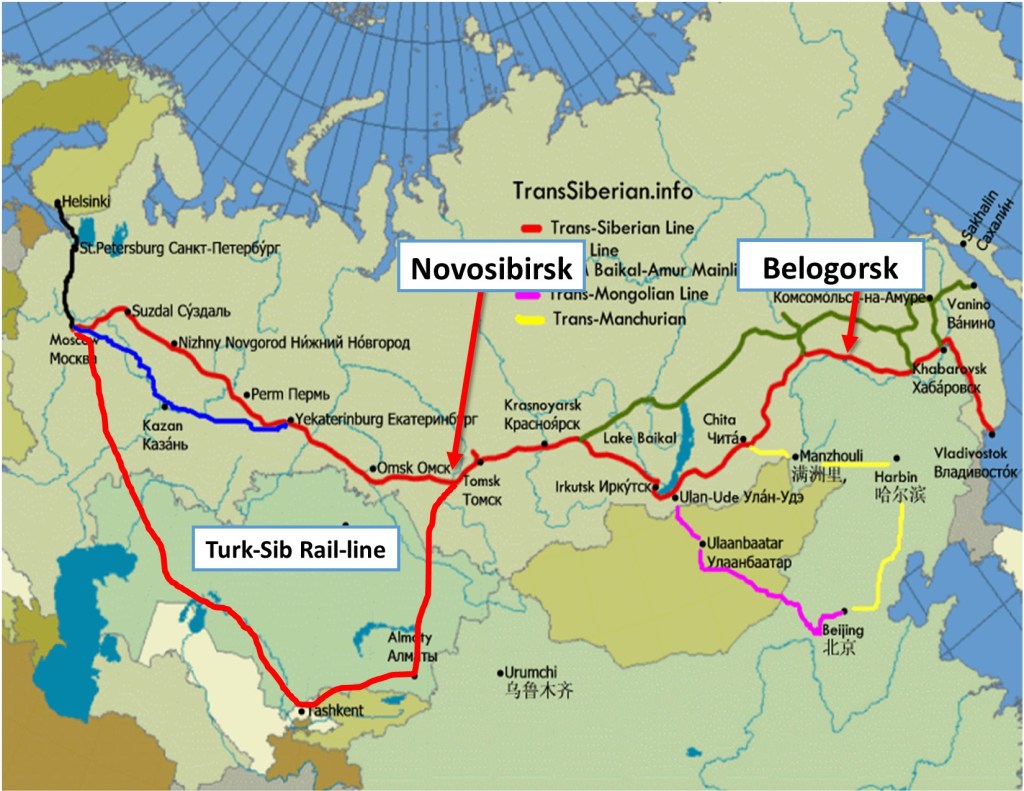
    The guard opened the gate, allowing me through passport control into Russia. I had no visa, so I was “Illegal.” I would have to keep a very low profile. My plan was to buy a ticket (as if I was a Russian citizen, which could be very tricky since you were supposed to show your passport) and board a train to Novosibirsk in central Siberia.

    Novosibirsk was a large city with a large “Hub” train station. The trans-Siberian rail line went through the city, but it was also where the “Turk-Sib” rail line began. This rail line went south-west into Kazakhstan in a large curve before turning north-west and ending up in Moscow. My plan was to get off the Trans-Siberian in Novosibirsk and buy a ticket to Almaty, Kazakhstan.

    I knew that on the Russian-Kazakh border they did not have passport-control yet. Since I had no visa for Russia or Kazakhstan, it was my only chance to get out of Russia before I got caught. I felt confident that I could negotiate some kind of visa in Kazakhstan, where there was still a lot of governmental confusion and endemic corruption.

    I rode a trolley-bus to the train station. It was dark and what I called the “Steel-mist” was falling. It was frozen water particles common as precipitation in that part of Siberia. Particles much smaller than sleet that swirled in the air. It was very cold.

    A word of explanation about that part of the the Trans-Siberian. The main rail line ran through about 120 kilometers (80 miles) north of the city at a small town called “Belogorsk.” The train I would get on would travel about four hours up to the main line where it would decouple our train cars and we would wait for them to be added to the next Trans-Siberian train coming through headed west.

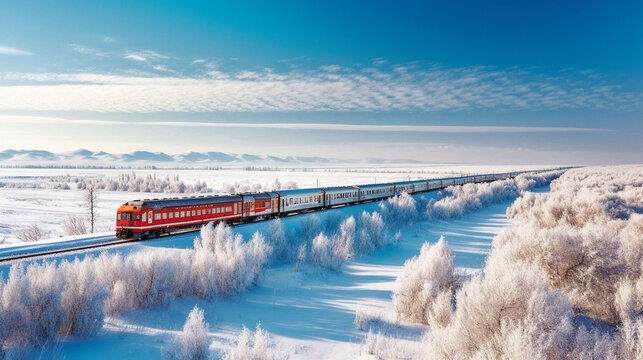
    Trans-Siberian Train. There were two, the “Rossiya” and the “Sibir”

    I went to buy a ticket from the tired, irritable Babushka manning the ticket window. She asked for my identification. I showed her my American passport and she pointed me towards the office for foreigners buying tickets. I knew that those tickets would be about ten times more expensive (and I was very low on money). I told her I couldn’t since I didn’t have enough money. She held her hands up. I told her “I want to go back to my parents (They were in Riga, Latvia and I did plan to go there after I got a visa in Kazakhstan)…but I don’t have much money left.” She looked at me and, as so often happened in my travels through the former Soviet Union, had mercy on me. She motioned for my money and began typing out the ticket.

    I waited a few hours in the train station and boarded the train about 12am. I was exhausted and, after making my bunk, went to sleep. I planned to sleep through the changeover in Belogorsk. I hoped to wake up already on my way to Novosibirsk. The trip would take three days to Novosibirsk and another 36 hours into Kazakhstan.

    I woke up to loud talking and the sound of a lot of people in the hallway. The door to the compartment was open and a man was standing in it. He was shouting something in Russian. “Everybody off! Get your things and get off!” I was having a hard time understanding. People were pleading and arguing. I had no idea what was going on. I stepped out in the hallway and saw through the windows that were were at Belogorsk in the coupling yard. Who were these people?

    There were several men standing in the hallway moving people along. They wore sport outfits with leather coats. This was the “Uniform” for criminals in the former Soviet Union in those days. Tracksuits and leather jackets.

    I went up to one and in my best “Dumb-foreigner” imitation asked them what was happening. The conductor (a lady) saw me and hurried up to the man I was trying to talk to. “He’s a foreigner” she said. “American.” The man stopped what he was doing and looked at me. He then yelled to another man that they had a foreigner in this wagon.

    The other man came up. He was different. He looked clean and calm. He asked me where I was from. I told him “Alabama, USA.” he looked at me and thought for a few seconds. “Let him stay.” he told them man beside me.

    Everyone except me (39 people) was forced to remove their belongings and leave the train. I could see them walking across the snowy train yard towards the station, dragging their bags.

    I was shook. I still had no idea what was going on. I moved over to the conductor who was visibly afraid. “Who are they?’ I whispered. “Mafia” she said, low enough to not be overheard. “What do they want?” I asked. She shrugged.

    What they wanted, I was to find out, was transportation to Novosibirsk. They spread out on the train car and occupied each compartment. In my compartment was a huge, blond guy who reeked of vodka. He brought a huge bag with him and put it on the upper bunk. I heard metallic sounds from the bag as he tossed it.

    I sat very still until the train got underway again. As we started moving, he dug out a bottle of vodka. He poured himself a glass and poured one for me. “Drink with me!” He said. I told him I didn’t drink. It is a offense to Russians to refuse to drink with them. This is something I would run into often. His face got agitated. “Drink!” He said, forcefully. “No, I am a Christian and I do not drink.” I told him. He leaned in close. “Do you know what I am called? I am ‘Bear.’ Everyone is afraid of me. If I tell you to drink, you will drink!” I again told him “I cannot.”

    I heard someone shout something from the next compartment. “Bear” got up and went next door. I heard low talking for a while. He came back and ignored me. A minute later another guy stuck his head in and told me to come with him. We went next door.

    The calm guy was sitting on a bunk. He was apparently the boss. He motioned me to sit down. He asked me my name and again where I was from. He asked if Alabama was close to New York city. He asked why I was here and where I was going. He then told me that I should not worry. No one would bother me. “I told them to leave you alone. If they bother you, call for me.”

    He went on to explain that they had to go to Novosibirsk but they could not carry their guns on the plane so they were taking the train. Apparently they also did not want to buy tickets! They simply took over the train wagon, knowing that no one would complain.

    In spite of his words, I tread very softly the next few days. “Bear” would mutter aggressively from time to time in my direction, but never made a move towards me. The first day out they all cleaned their guns (they had Ak-47’s, Makarov pistols and Saiga shotguns). After that they would get them out occasionally and play with them, pointing them at the windows and working the slides. They were extremely bored and stayed drunk most of the trip. I carried more books than clothes in those days before Kindles and read through a Martin Luther Biography. To this day, when I hear the name “Martin Luther” I have a mild flashback to that train car. The leader never talked to me again.

    The train stopped at a small station on the edge of Novosibirsk three days later. They all got off. As they left, the boss (last to leave the wagon) noticed me standing in the doorway of the compartment. He winked.

    September 9, 2024

  • The Frozen River

    Correction: Instead of “Hydrofoil” I should have said “Hovercraft.”

    January, 1993 – Blagoveshchensk, Siberia, Russia

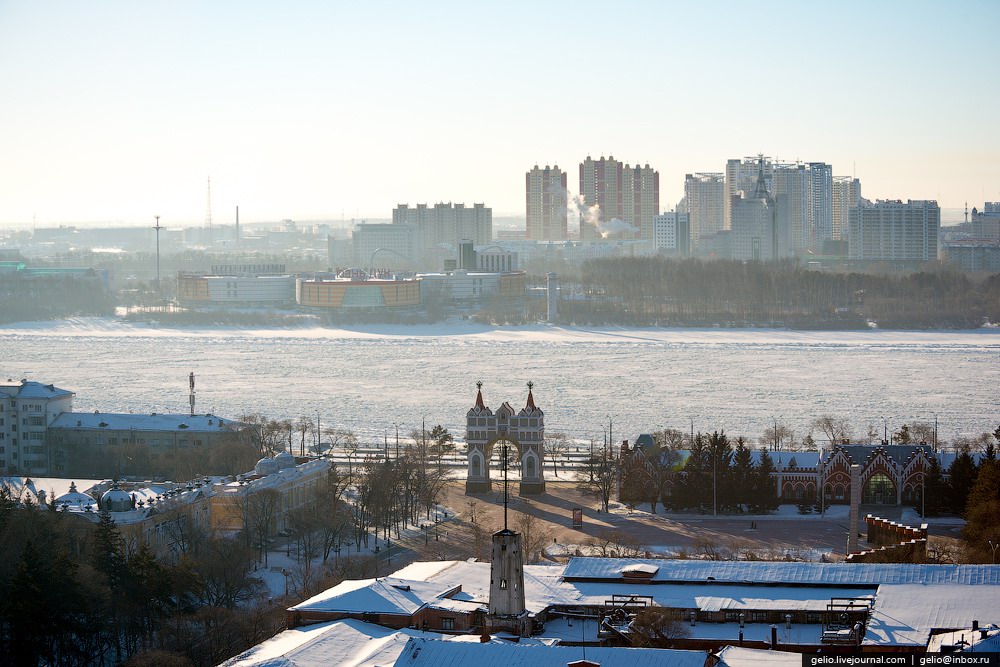
    I looked across the Amur River at the Chinese city of Heihe. It was shrouded in smoke from the many coal furnaces used in homes and factories. The pollution hung low to the ground in the subzero air. The river itself was sheet of ice, frozen to a depth of 15 feet.

    The Amur River formed the border between Russia and China for over a thousand miles. This was one of the most sensitive borders in the world, the site of many military skirmishes and an all-out, though brief, war in 1969. Tensions were high and hatred was overt.

    Blagoveshchensk, Russia and Heihe, China across the frozen river.

    Blagoveshchensk was a border-city and a closed city to outsiders. The Soviet Government had forbidden any tourists from visiting since the 1960’s. When I had arrived “Under the radar,” (buying my ticket as a Russian citizen when I was not and not registering with the government since I was travelling to a city where foreigners were not allowed to go) it had caused a great ruckus with no one knowing what to do with me. I had exited the train and shown up at a motel asking for a room while holding an American passport. This set off a furious commotion as calls were made and one by one each motel in the city had refused to accommodate me. They were afraid.

    I finally found a room in a student hostel where cash spoke volumes (though I had precious little cash to speak of). The room was not bad, though the toilets were communal with about 150 students. I immediately noticed that, unlike other cities in the former Soviet Union, no one seemed to want to talk to me. Everyone acted as if I was invisible.

    I had come to this city, 9 time zones away from Moscow, from Kazakhstan. The purpose of my visit was to investigate the possibility of moving Bibles, New Testaments, doctrinal books and evangelistic literature across the border into China. This was the “Backdoor” into what was the greatest remaining Communist country in the world and, in the 90’s, one of the most aggressive anti-Christian countries. Missionaries were smuggling Bibles in by the dozen from Hong Kong and taking great risks to do so. If the Russian-Chinese border could be used, might it not be unexpected by the Chinese authorities? Might we be able to move not dozens, but thousands of Bibles at a time, carefully hidden in shipments of other goods?

    Across the border a veteran “Long-term” American Missionary waited for me. He had travelled a long distance to likewise test the viability of the “Backdoor to China” theory. I was to meet up with him if I made it across. He had established networks of underground Christians that would put to good use any literature we could smuggle across.

    In those days there were no smartphones, Google or even internet to make use of. I was flying blind. I was ignorant of the fact that Blagoveshchensk was a river crossing (using small boats in the summer and Hydrofoils on the ice in the winter). I was also ignorant of the fact that “Third-country” passport holders were not allowed to cross., only Russian and Chinese citizens.

    I felt I must get across. I had to see if the Chinese were vigilant and organized in their processing of people entering the country. Our hope was that they were careless or corrupt. If they paid little attention to who or what was coming in, we could make use of that.

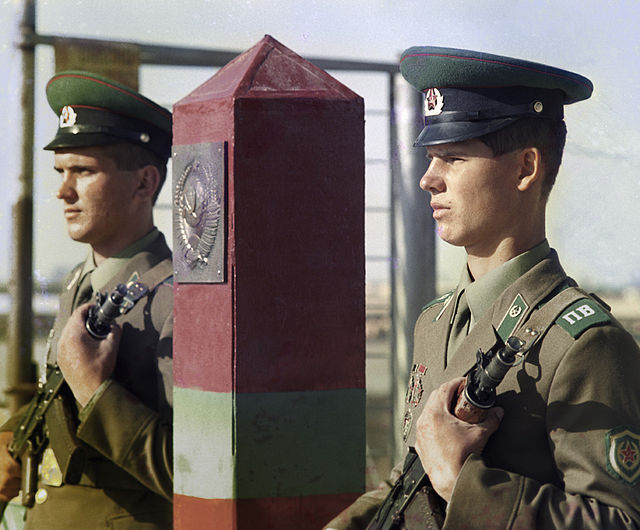
    I had met Vitaliy on the train. He was a soldier in the “Po-Granichniy” Army unit that guarded that stretch of the Russian-Chinese border. They were easily identified by their forest-green shoulder boards and hat fringes. He was bringing a platoon of soldiers to their post. He was a lieutenant. He had noticed that I was not eating (my food had run out and the restaurant car had frozen-up in the -40 degree weather) and he had invited me to come sit with him and his soldiers. They were opening cans of something and eating it cold. He gestured for me to take one and opened it for me. It was boiled barley with mutton fat. To this day I have trouble eating boiled barley.

    “Po-Granichniy” soldiers guarding the border.

    He was kind and curious. We began a friendship. Later he invited me to his home to meet his wife and had others officers there to meet me. They were all curious about America. They were also very curious about what I was doing in the closed city! They treated me as if I was family and answered my questions about the border.

    He told me the name of a man that could maybe help me get across. He was vague about what the man did. When I later found the man I was to discover the man was the local top officer in the KGB. This man told me to call him “Victor.”

    Victor told me the border was closed and that I should not be here. He said “You can be arrested for simply coming here.” I apologized, pled ignorance and told him that I needed to cross to meet my friend on the other side. Victor said he would make inquiries. A week later he called me back to his office.

    “I can help you but it will cost $100. Do you have this?” He told me. I told him I did and he reached into his desk drawer and pulled out a piece of paper. “This is a Chinese approved one-entry Visa invitation.” He told me. I looked at the paper and it had someone’s name on it. He waved off my concerns and opened a bottle of white-out. He whited-out the name written and wrote in my name. He handed it to me and told me “Take this to the Chinese Embassy, and they will give you a visa.” I travelled to the Chinese consulate 18 hours away in Khabarovsk and was given a visa with no problem.

    When I got back to Blagoveshchensk I went to Victor and asked him “Can I cross here with this visa? I’ve been told that they will not let me enter.” He waved off my concerns again and said “Don’t worry! I have called my Chinese Intelligence counterpart. We know each other very well. He says they will let you in. He will take care of it.”

    I left and went back to my room and called Vitaliy to share the good news. Vitaliy’s wife answered. She sounded as if she was crying. “Please do not call here again. Vitaliy is in great trouble for fraternizing with you. The authorities are questioning everybody who has had contact with you. Please forget our number!”

    I knew I needed to get across the river fast or I was going to be detained. I had to acknowledge that I looked and acted like a spy, albeit an inept one. I packed and went down to the river-crossing port. They told me to come back tomorrow since the Hydrofoil had already made its daily trip. I was there at 10am the next morning. A camera-crew from Reuters News was filming. I asked them why they were filming me and they said I was the first outsider to ever cross that border and they wanted to document it for news purposes.

    I cleared passport control where they took my Russian visa (the visa was in two parts, one part was taken upon entry to Russia and the second part was taken upon exit. I walked toward the hydrofoil and stood in line. A Russian soldier was there whom I recognized as a sergeant. He looked at me and seemed curious, so I struck up a conversation. In true xenophobic fashion (many Russians in that area are racist towards Chinese) he began to warn me about the Chinese. “They are brutal. Don’t break the rules or you will find out!” along with other less-savory descriptions, most of them unprintable. I thanked him for his “advice” and for some reason gave him a keychain I kept in my pocket that was from Rainbow City, Alabama. He waved and nodded as I climbed up the ramp to the Hydrofoil

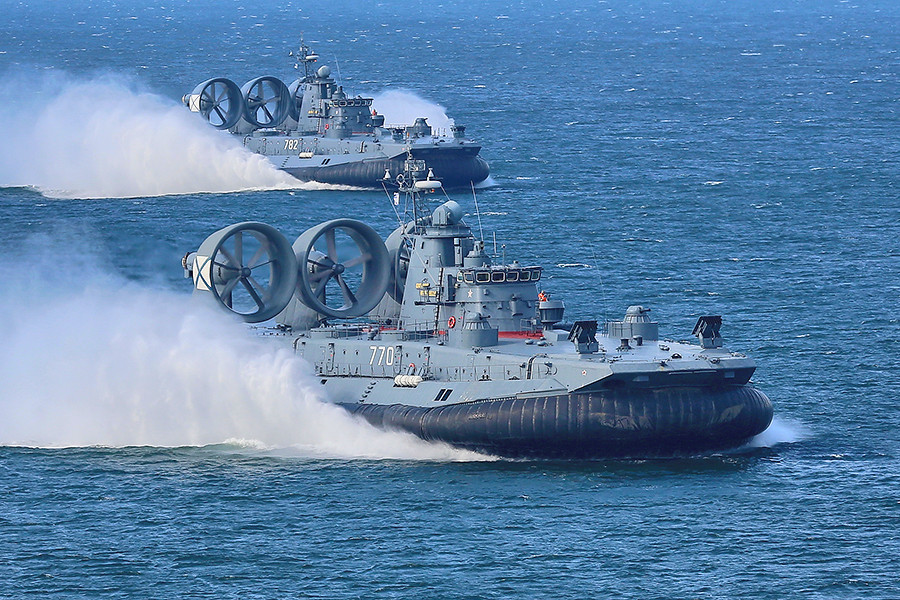
    The Hydrofoil air-boat cranked up and inflated its large air bladder. It began to move across the ice for the 5 minute trip across the river. We arrived on the Chinese side and walked up the bank to the Chinese Passport control. I got in line and showed my passport at the little window when it was my turn.

    Soviet Inflatable Hydrocraft

    The reaction was immediate and dramatic. He snatched up my passport and looked closely, then opened it an looked at the photo page, a stunned look on his face. He began waving his hand back an forth and shaking his head saying (what I assumed was) “Not allowed! Not allowed!” He came out of the booth and waved me along with him while speaking loudly in Chinese. I was taken into an office where a man sat behind a desk. This man took my passport and merely glanced at the front. He also began shaking his head and waving back towards Russia while saying something very loudly. I tried to speak while also reaching for my passport to show him the valid visa. He snatched my passport up and threw it at me and began shouting. He motioned to two soldiers who had come in and pointed towards me and gesturing back to the boat. I realized that someone hadn’t gotten the memo, if there ever had even been a memo….

    As the solders took my arms, the man behind the desk stopped them. He took my passport back and opened it. “Finally!” I thought “He is going to investigate” but, no. He opened my passport to a blank page and reached into his desk for a large stamp. He stamped my passport with a large red block and then added another smaller one another page (I later found out this was a PERSONA NON GRATA stamp which said I had broken the laws and was not to be allowed back into China, etc.). He handed it back to me and told the soldiers to get me moving. They took me by the arms and walked me briskly back towards the hydrofoil.

    I did not like being manhandled. I resisted, trying to slow them down. That was a mistake. They screamed something and tried to lift me off my feet, propelling towards the boat. I wish I had been spiritual enough to accept it all “As God’s will” and “In everything give thanks” but I was mad. Anyway, in spite of my hurt feelings, we shortly arrived back at the boat. They marched me up the ramp and told the captain to take me back. He refused. “I have no empty places!” They got in his face and informed him that it was his problem and marched off the boat. The captain looked at me and pointed to the floor near the door. “Sit there.”

    We arrived back on the Russian side of the river and everyone exited the boat, filing up to the gate into passport control. I suddenly realized that I had a new problem. I had no visa! They had cancelled mine when I left the country, albeit for 30 minutes. How was I going to get back into Russia. I stood on the bank of the Amur River looking up at the fence with one little gate and finally prayed. I was stuck in no man’s land in Siberia with no visa, in a city I was not allowed to be in, in a country that took visa’s and foreigners very seriously.

    I stood there for several minutes until all the boat passengers had filed through the gate. I tried explaining to the guard but he pushed me back and closed the gate in my face. I hoped he was going to go get a superior to decide what to do. He disappeared. As I stood there, thinking hard, the door opened to the little passport control building and out stepped the sergeant! The one I had given the key chain to. He looked at me quizzically.

    “What happened?” He asked. I told him. He started nodding his head knowingly. “I told you! They are barbarians! Didn’t I tell you.” I acknowledged that he had, in fact, warned me about the Chinese authorities. He said “What are you going to do?” I shrugged. “What do you want to do?” He asked. I answered “If I can get through that gate, I’m going to ride a bus to the train station, buy a ticket to Kazakhstan and leave the country. “Why Kazakhstan?” he asked. “Because they do not have visa control on the trains yet. I can arrive in Almaty, Kazakhstan and worry about a Kazakh visa later.”

    He thought for a minute, looked around and pulled a key out of his pocket. He opened the gate and motioned me through. “Go, quickly!” He said, “You didn’t see me and I didn’t see you.” I took off and two hours later my train pulled out on the station on a four-day trip to Kazakhstan.

    Part 2 of this story to follow….

    September 2, 2024

  • A Hole In The Wall

    Berlin, Germany

    It was cold. To date one of my three coldest experiences (and I have wintered in Siberia). We were standing at the Berlin wall which throughout my life had been a symbol of Communist brutality and oppression. The wall represented the evil of Godless atheism. The physical symbol of the murder the communist governments were capable of.

    In 1989 “The Wall” had begun to open. Germans from the Communist east and the free west had swarmed the wall in November and in a shock to the world, the Communists had backed down. They had allowed the wall to be opened. Hundreds of thousands of East Germans had immediately begun to stream through, seeking freedom.

    My father had acted immediately. “They may close the wall back. We have to get Gospel literature into east Berlin while we have the chance.” He said. He, myself and two other men flew to Germany after shipping many boxes of German Gospel tracts and scripture portions to Germany using American Military APO addresses.

    Americans and Germans alike were still in shock that the Communists of East Germany, long considered the most brutal Communist regime in Europe, had surrendered so suddenly to their people. Almost everyone thought that it must be temporary.

    We picked up the literature in Baumholder, Germany. We drove a van loaded with boxes through Germany and into East Germany, using one of three corridor routes to Berlin that had existed since 1945. Highways that traversed Communist East Germany into Western-controlled West Berlin. Travelers were not allowed to exit the Highway for more than 1 kilometer. Arriving in West Berlin you entered one of three zones, the American, British or French. On the other side of the wall was the Russian zone.

    While waiting for the East German contacts to come and take the literature we had brought, we decided to evangelize at the wall. We went to the Brandenburg Gate area which was where President Ronald Reagan (with seemingly prescient inspiration) had loudly proclaimed: “Mr. Gorbachev, tear down this wall!” We carried shoulder bags full of Gospel literature in German and were passing them out to everyone.

    This is the opening mentioned in thee story.
    This is the crossing mentioned in this story. Wikipedia

    The Wall had only just “opened” and there were very few places to cross from east to West. Near the Brandenburg Gate was one small crossing. A small section of the wall had been chiseled out, roughly the width of a large door. Long lines of East Germans stood in line to pass through this hole in the wall. On the East German side stood the famous East German “Grentstruppen” border guards. Over the preceding 44 years they had murdered tens of thousands of their own people, most shot down trying to cross the border. They gunned down children, women and elderly without warning.

    People coming out of East Berlin first came to the East German border guard. He would examine their passport and write their name down in a book. They then moved to the Soviet (Russian) guard (since the eastern Berlin zone was administered by the Russians). The Russian guard would take their passport and put a small stamp with the date. They then crossed through the small hole and were met by an American soldier (since they were entering the American sector) and then by a West German border guard. Obviously this slowed down movement greatly and created a huge bottleneck on the eastern side of the wall.

    I was freezing. While the temperature wasn’t much below freezing the humidity was high and I wasn’t dressed for it. I tried to keep moving as we passed out tracts and brochures. I found myself standing next to the West German guard, the fourth stop for people coming through.

    Germans passing through the wall were curious about what I was passing out. The tract had a artist conception of Christ on the cross on the front with His wounds visible and blood flowing down and the words: ALL THIS I DID FOR YOU. Many of the East Germans were very curious and thanked me when I gave them one with others asking me for them. These were people who had been under the most brutal Communist regime in Europe (excepting perhaps Albania). They had seen their churches destroyed and used as stables. For many, worshipping Jesus was a distant memory their grandparents told them about. They wanted the tracts and I witnessed many people clutching them to their chests as they walked away.

    Being of an aggressive nature, I began to “push my luck.” I worked my way towards the wall opening where the people emerged to make sure I missed no one. I was technically inside the “No man’s land” between the two countries. Five feet away, through the opening in the wall stood a Soviet Soldier! These were the “Enemy” we had grown up fearing.

    I started handing a tract to each person as they passed through and noticed the Soviet soldier and East German guard on the other side eye-balling me, looking at me out of the corner of their eyes. They saw what I was doing and their curiosity was up.

    As I continued to pass out the tracts, I noticed the Russian soldier suddenly motion to me. He was waving me over to him! I passed through and walked up to him (I was now technically in the Soviet-controlled zone and East Germany). He continued to take passports as he motioned me to show him what I was passing out. He looked at the front with Jesus on the cross and his eyes widened. He smiled. He pointed to his chest and said “Russiche” (Russian) and spread his hands, indicating that he could not read the German. I spread my hands indicating that I had none in Russian.

    He then did something very unexpected, he motioned me to stand beside him. As each east German handed their passport to him for the stamp, he turned to me with the passport open and motioned me to put a tract in the passport! I was shocked to say the least. I began to put a tract in each passport.

    I continued for several minutes. During this time the East German guard was saying something to the Russian in Russian. I assume he was saying “You can’t do that.” The Russian answered him and as he continued the Russian shrugged his shoulders and kept holding the passports open for me.

    I have often wondered about that Russian soldier. Presumably raised in the atheist Communist system. What in his life made him revere that image of Jesus on the Cross? Why did he risk reprimand and censure, perhaps even punishment to make a public stand for the Lord Jesus Christ?

    I hope one day I will find out in Heaven. Perhaps he will tell me himself.

    August 30, 2024

Blog at WordPress.com.


Loading Comments...
 

    • Subscribe Subscribed
      • Stories From My Life
      • Already have a WordPress.com account? Log in now.
      • Stories From My Life
      • Subscribe Subscribed
      • Sign up
      • Log in
      • Report this content
      • View site in Reader
      • Manage subscriptions
      • Collapse this bar